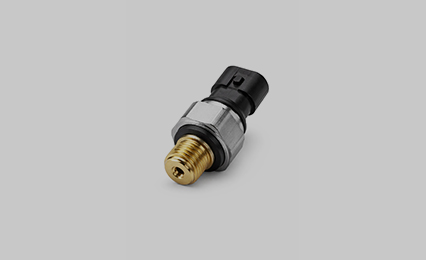
Precision plastic and metal sensor housings for automotive and industrial sensors — injection molded, CNC machined and 100 % leak-tested. We engineer the protective structure; sensing elements remain customer-supplied.
Housings plastic · metal · hybrid
Tolerance ±0.02 mm critical
Sealing IP67 / IP68
Temp −40…+200 °C
Threads M8–M30 · G · NPT

PRESSURE HOUSING · PBT GF30 + 316L
SECTION 04 → INTERACTIVE ARCHITECTURE
PORTFOLIO
Sensor Housing Portfolio
Seven housing categories, one engineering system — injection molded polymer, machined metal and hybrid structures, built to customer print.

Injection molded glass-filled housings that seal sensor electronics to IP67 / IP68.
APPLICATION
Inductive · photoelectric · position
APPLICATION
Precision injection molding
LEARN MORE
Stainless steel and aluminum housings for harsh media, pressure and EMI-critical duty.
APPLICATION
Process · heavy-duty sensing
APPLICATION
CNC turning & milling
LEARN MORE
Stainless or engineered-polymer structures built for pressure containment, sealing reliability and dimensional stability.
APPLICATION
Hydraulic · brake · HVAC pressure
APPLICATION
Machining + molding hybrid
LEARN MORE
M8–M30 barrels and G / NPT process threads with gauged 6g / 6H fits.
APPLICATION
Proximity switches · level probes
APPLICATION
Molded or single-point turned
LEARN MORE
Brass and stainless inserts anchored directly in the polymer structure.
APPLICATION
High-torque mounting interfaces
APPLICATION
Insert molding, one shot
LEARN MORE
Thin-wall structural bodies below 12 mm for space-critical sensor packages.
APPLICATION
Compact automotive · robotics
APPLICATION
Micro-tolerance molding
LEARN MORE
Application-specific protective structures co-developed from your sensor envelope.
APPLICATION
New sensor platforms
APPLICATION
Engineered per project
LEARN MORE
APPLICATIONS
Housing applications
Grouped by what the housing must survive — not by sensor type. Each links to a dedicated engineering guide as this hub grows.

Ported structures that contain system pressure and keep the seal loaded.
Pressure resistance
Thread accuracy
Sealing
LEARN MORE
Stainless bodies that live in hot oil, pressure spikes and vibration.
Oil resistance
Mechanical durability
LEARN MORE
Probe and head structures that hold geometry under continuous heat.
Thermal stability
Stable fits
LEARN MORE
In-line and cap structures sealed for washdown and media contact.
Media contact
Washdown sealing
LEARN MORE
Enclosures that shrug off dust, coolant and cleaning cycles.
Environmental protection
IP67 · IP68
LEARN MORE
Under-hood structures qualified for vibration and service life.
Vibration resistance
Reliability
LEARN MORE
ANATOMY
anatomyInteractive cable assembly
Select any of the seven layers - the panel shows its function, material and theengineering consideration behind it.
ENGINEERING CHALLENGES
Engineering challenges we solve
Cable programs rarely fail on paper - they fail on noise, moisture and motion. These arethe problems we are hired to remove.
Challenge
Prevent leakage under washdown, immersion and thermal shock.
Solution
Optimized sealing surfaces, controlled groove tolerances and 100 % pressure-decay testing.
IP67 · IP68
Challenge
Guarantee reliable sensor installation, torque after torque.
Solution
Precision machining with 100 % GO / NO-GO gauging per ISO 1502.
ISO 1502 · 6g / 6H
Challenge
Hold critical dimensions across temperature and moisture swings.
Solution
Low-uptake materials, annealing and process control on CTQ features.
±0.02 MM HELD
Challenge
Maintain structural integrity at proof and burst pressure.
Solution
Optimized wall thickness, radii and ported-body design — verified on the rig.
PROOF 1.5× · BURST 3×
Challenge
Keep molded-in metal loaded without cracking the polymer.
Solution
Knurl geometry, minimum-wall rules and torque-out validation per lot.
TORQUE-RATED
Challenge
Land ±0.02 mm where molded and machined features meet.
Solution
Steel-safe tooling, in-process SPC and Cpk-monitored release.
CPK ≥ 1.33
Challenge
Survive oils, coolants and cleaning agents for years.
Solution
PPS, FKM and 316L material stacks matched to your media list at DFM.
PPS · FKM · 316L
Challenge
Survive automotive vibration and handling without fatigue.
Solution
Ribbed structures, secure retention features and profile testing.
AUTOMOTIVE PROFILES
MATERIALS
Cable & material selection
The jacket sets the environment, the shield sets the signal. Compare the options - theconstruction is locked against your duty profile at DFM.
MANUFACTURING
Housing manufacturing workflow
Eight controlled steps from certified material to a pressure-tested housing — one integrated process chain, not a hand-off between suppliers.
Resin dried and lot-logged; bar stock certified with 3.1 documents.

Tooling and CAM frozen at DFM; critical dimensions cut steel-safe.
Polymer structures molded, metal bodies machined — routed by the design.
Sealing faces, grooves and hex features finished to print.
Anodizing, passivation or plating matched to media and wear duty.
Inserts, seals and covers joined into one verified structure.
CMM and vision on CTQ features against the control plan.
Pressure-decay on every sealed housing; proof tests on ported bodies.
Quality control
Housing validation & quality control
Every housing is qualified as a structure — geometry, sealing and strength proven with measured data, not assumptions.
In-process SPC on molding and machining cells, tied to the control plan.
PER CONTROL PLAN
Tactile measurement of CTQ features; capability reported per lot.
CPK ≥ 1.33 TARGET
GO / NO-GO gauging plus profile checks on cut and molded threads.
ISO 1502 · 6g / 6H
Sealing faces verified so the O-ring loads evenly around the joint.
≤ 0.05 MM TYP
Bore-to-thread runout controlled for sensing-element alignment.
≤ 0.05 MM TIR
Pressure-decay verification of every sealed housing in series production.
REF IEC 60529 · IPX7 / IPX8
Proof and burst testing on ported housings before release.
PROOF 1.5× · BURST 3×
Seal and fit stability across temperature extremes and shock.
−40…+150 °C PROFILES

ZEISS measuring room
Pressure-decay leak station
Burst / proof pressure rig
PORTFOLIO
Sensor cable assembly portfolio
Five recurring assembly families — every one engineered around the signal, the environment and the routing, then built to customer print.
Seal direction, groove math and leak-test strategy.
LEARN MORE
Cost, weight and media resistance compared.
LEARN MORE
Ports, hex drives, wall thickness and burst margins.
LEARN MORE
Gates, parting lines and steel-safe strategy.
LEARN MORE
Fits, gauging and molded-thread limits.
LEARN MORE
Compression, groove fill and surface finish targets.
LEARN MORE
FAQ
Common Questions
Get a Quote
Tell Us About Your Part